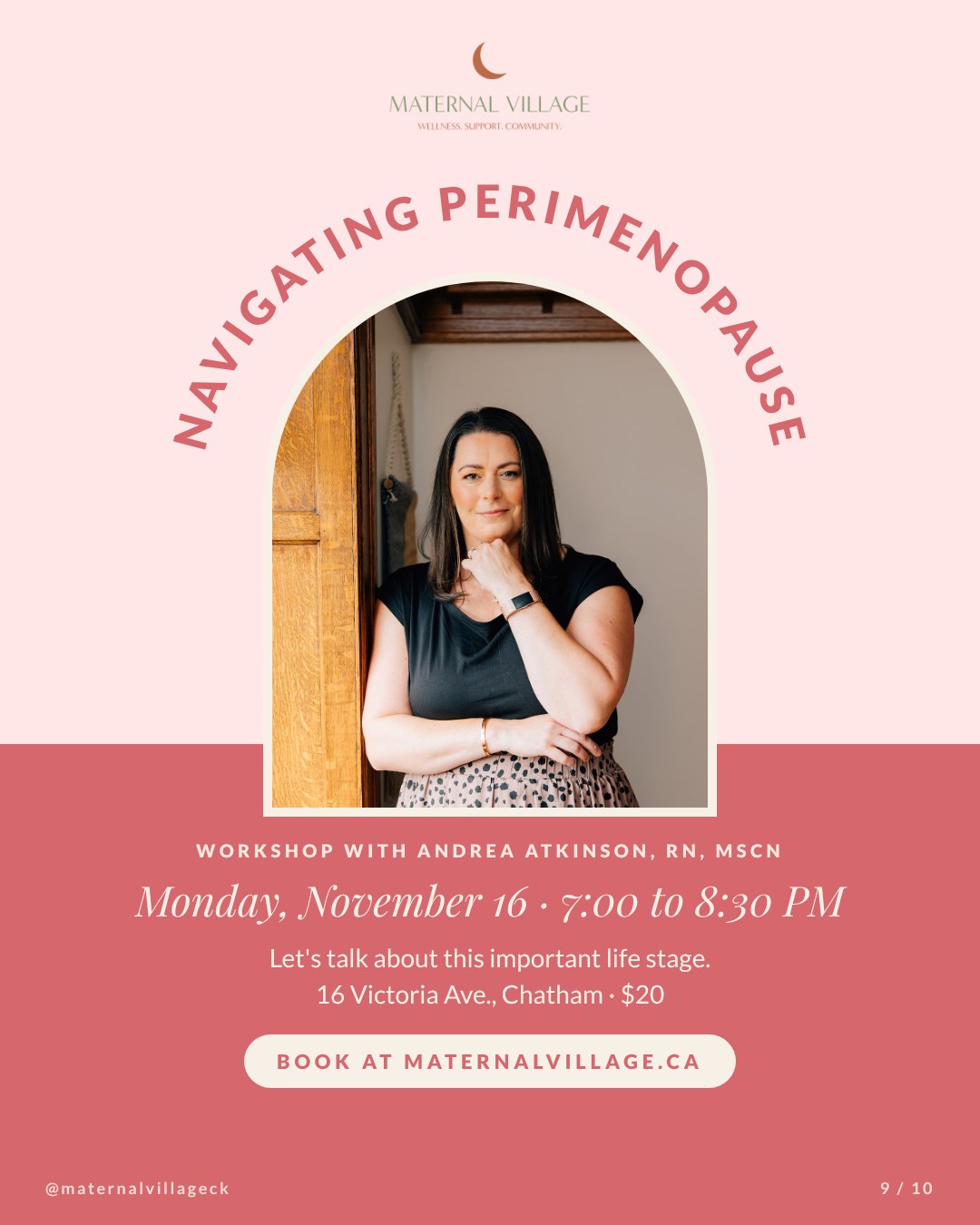
By Andrea Atkinson, RN, MScN,
Menopause & Postpartum Support Practitioner at The Maternal Village
There is a lot of information about perimenopause out there, and not all of it is accurate. Some of the most common beliefs keep women from recognizing what's happening, getting checked when they should, or asking about treatment that could help.
Let's break the silence surrounding perimenopause, starting with the myths.
Myth 1: "Perimenopause only starts when you're in your 50s."
Fact: Many women begin experiencing perimenopause in their 40s, and some even earlier.
Myth 2: "Everything is normal one day, and then suddenly you're in menopause."
Fact: Perimenopause is usually a gradual transition that can last several years. Hormonal fluctuations and symptoms can begin before periods stop completely.
Myth 3: "You can't be in perimenopause if you're still getting periods."
Fact: Perimenopause happens before menopause. You may continue having periods, even while experiencing symptoms.
Myth 4: "If I don't have hot flashes, I can't be going through perimenopause."
Fact: Hot flashes are common, but perimenopause can involve many other changes, including:
Sleep problems
Mood changes
Brain fog
Changes in periods
Vaginal dryness
Changes in sexual function
Joint and muscle symptoms
Myth 5: "Forgetfulness and difficulty concentrating are simply part of aging."
Fact: Some women experience noticeable changes in memory, concentration and word-finding during the menopause transition. However, persistent or severe cognitive symptoms deserve medical evaluation rather than automatically being attributed to menopause.
Myth 6: "Perimenopause is natural, so you just have to put up with the symptoms."
Fact: Although perimenopause is a natural life stage, distressing and unpleasant symptoms can often be treated. Options may include:
Lifestyle changes
Non-hormonal treatments
Hormonal treatments
Vaginal/local treatments
Treatment for sleep or mood symptoms
Myth 7: "Hormone therapy is too risky and should never be used."
Fact: Hormone therapy has both potential benefits and risks, and those risks vary depending on factors such as age, timing, formulation, route of administration, medical history and whether the uterus is present.
For some women it may be an appropriate treatment; for others it may not be. The question isn't simply "Is hormone therapy good or bad?" It's "Is it appropriate for me?"
Myth 8: "I'm in my 40s and my periods are irregular, so I don't need contraception anymore."
Fact: Pregnancy is still possible during perimenopause. Ovulation can occur even when periods become irregular.
Contraception is generally needed until menopause has been established, with timing depending on age and circumstances.
Irregular periods do not necessarily mean infertility.
Myth 9: "Any change in bleeding is just part of perimenopause."
Fact: Periods often become irregular during perimenopause, but very heavy, prolonged or unusually frequent bleeding, or bleeding after menopause, should be discussed with a healthcare professional.
Don't automatically assume every change is hormonal.
Know what is common, and know when to get checked.
You Deserve to Feel Informed, Supported and Heard
New to all of this? Start with What Is Perimenopause? Signs, Symptoms and How Long It Lasts.
Menopause Support in Chatham-Kent
You do not have to navigate perimenopause alone. Understanding what is happening in your body is the first step toward feeling more like yourself.
Andrea offers one-on-one menopause support, evidence-based workshops and support groups at The Maternal Village, 16 Victoria Ave. in Chatham.