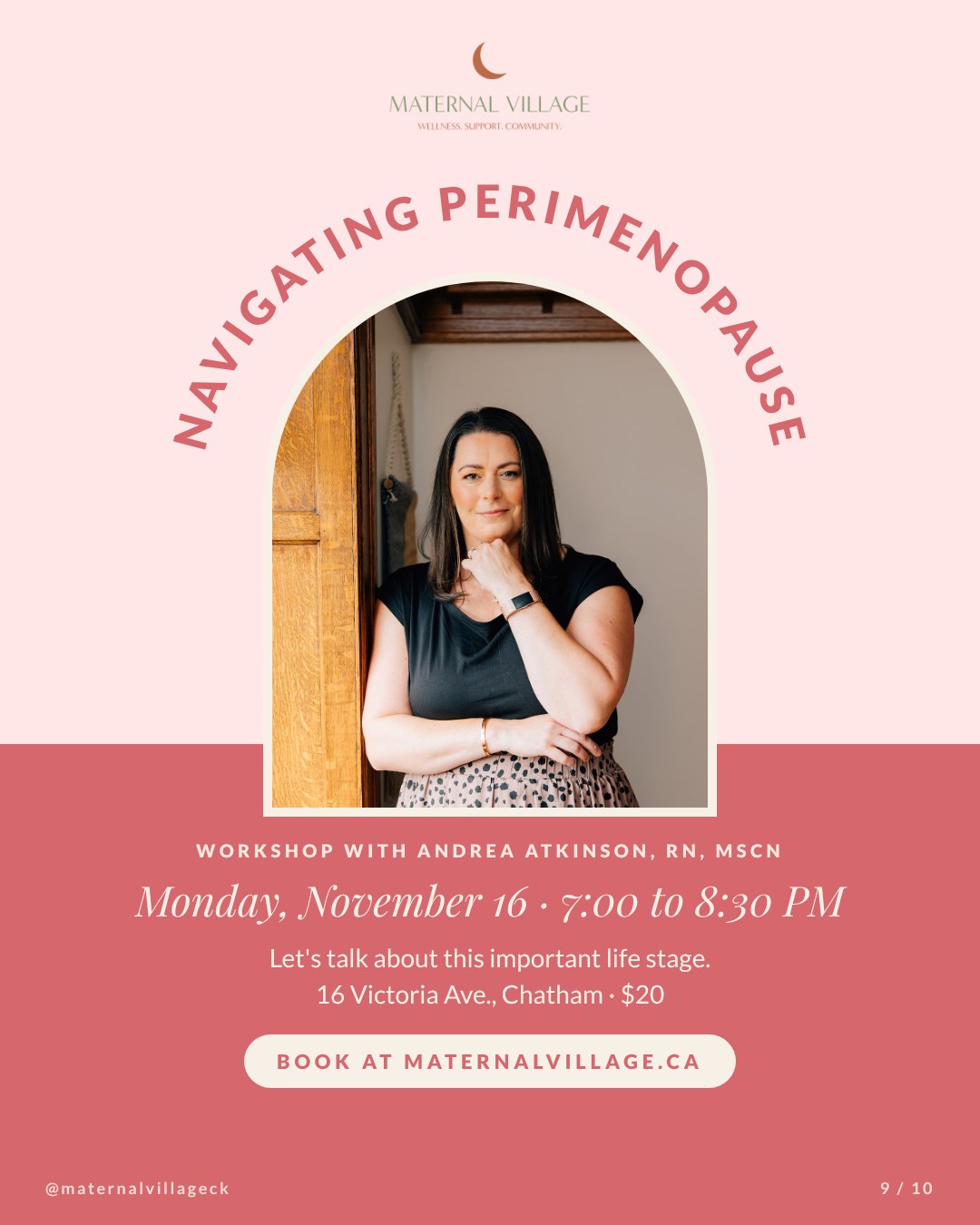
By Andrea Atkinson, RN, MScN,
Menopause & Postpartum Support Practitioner at The Maternal Village
Perimenopause can feel like stepping into a chapter of life that you never quite prepared for. One day, you feel like yourself, and the next, you're wondering why you can’t sleep, your mood feels unpredictable, your energy has disappeared or your body seems to be changing in ways you don't fully understand.
If this sounds familiar, you're not alone.
Although perimenopause is a natural stage of life, the transition can be challenging. It can bring physical, emotional and mental changes that affect how we feel, how we work, how we relate to others and how we see ourselves. Yet, despite how common this transition is, many women still find themselves navigating it with little information or support. That's true here in Chatham-Kent as much as anywhere.
The good news? Understanding what is happening in your body can help you feel more confident, empowered and prepared for the journey ahead.
What Is Perimenopause?
Perimenopause is the transitional stage leading up to menopause. During this time, hormone levels, particularly estrogen and progesterone, fluctuate as the ovaries gradually change their activity.
For many women, perimenopause begins in their 40s, although it can start earlier.
How Long Does Perimenopause Last?
The transition may last several years and up to 10 years, and every woman's experience is different.
Perimenopause vs. Menopause:
What's the Difference?
Menopause is officially reached after 12 consecutive months without a menstrual period, provided there isn't another cause for the absence of periods. Perimenopause is the period leading up to that milestone, when symptoms and menstrual patterns may become unpredictable.
It is important to remember that perimenopause is not an illness. It is a natural life transition. However, the symptoms can be challenging, and you deserve support in managing them.
Signs of Perimenopause: Your Body Is Speaking to You
One of the most confusing aspects of perimenopause is that the symptoms can look different from one woman to another, and menopause is more than simply hot flashes. Some experience only mild changes, while others find that their symptoms significantly affect daily life.
Common symptoms include:
Irregular periods: Your menstrual cycle may become shorter, longer, heavier, lighter or less predictable.
Hot flashes and night sweats: Sudden waves of heat or sweating that can interfere with comfort and sleep.
Sleep disturbances: You may struggle to fall asleep, wake frequently or feel exhausted even after spending enough time in bed.
Mood changes: It is common for many women to experience increased irritability, anxiety, low mood or feeling emotionally overwhelmed.
Brain fog: Your brain undergoes changes in perimenopause, too. Concentration, memory and mental clarity may feel different than they used to.
Changes in energy and weight: You may notice shifts in energy, body composition or where you tend to carry weight, which often migrates towards your abdomen.
Changes in sexual health: Vaginal dryness, discomfort during sex or changes in sexual desire can occur.
Musculoskeletal discomfort: Some women notice new or worsening aches and pains in their joints, headaches and other physical changes.
Is It Perimenopause, or Something Else?
These symptoms can overlap with other health conditions, stress, medication effects and the demands of everyday life. Not every new symptom should automatically be attributed to hormones. Your concerns warrant a conversation with your care provider to rule out other causes before attributing symptoms to perimenopause.
When to get checked: If your periods become unusually heavy, you bleed between periods or after sex, or you experience bleeding after menopause, speak with a healthcare professional. Seek urgent care for very heavy bleeding accompanied by dizziness, faintness, chest pain or shortness of breath.
Start Here: Listen to Your Body Instead of Fighting It
One of the most important steps in navigating perimenopause is learning to pay attention to what your body is telling you.
Maybe you no longer have the same energy levels you once did. Maybe you need more recovery time after exercise, feel overwhelmed by a busy schedule and many responsibilities, or find that late nights affect you more than they used to.
Instead of criticizing yourself for not keeping up with your old routines, consider what your body might need now.
Start by noticing patterns. Consider keeping a simple journal of your menstrual cycle, sleep, mood, energy levels, hot flashes and any other symptoms you might be experiencing. Over time, you may begin to recognize triggers and patterns that help you make more informed decisions.
(The Menopause Foundation of Canada offers a great menopause symptoms tracker, and there are lots of other tracking templates available online.)
Most importantly, give yourself permission to adjust.
Rest is not laziness. Setting boundaries is not selfish. And needing something different from what worked for you five or ten years ago does not mean you are losing yourself.
It means you are responding to a new season of life.
Menopause Support in Chatham-Kent
You do not have to navigate perimenopause alone. Understanding what is happening in your body is the first step toward feeling more like yourself.
Andrea offers one-on-one menopause support, evidence-based workshops and support groups at The Maternal Village, 16 Victoria Ave. in Chatham.